China Top 10 Rapid Deploy Temporary Micro Shelters? This guide examines how leading Chinese suppliers approach urgent, compact, and adaptable shelter solutions.
Rapid-deploy temporary micro-shelters can serve disaster relief teams, construction crews, medical units, event staff, and remote workers. The best models are not judged by speed alone. We will examine deployment time, folded dimensions, structural stability, insulation, waterproofing, ventilation, fire resistance, and repair access. Practical details matter. A shelter that unfolds quickly but overheats at noon is not a complete solution.
Nabeel Hamdi, an architect, planner, and author of Housing Without Houses, stated, “Housing is a process, not a product.” His principle remains useful here. Temporary shelters should support dignity, safety, and changing human needs. A compact unit must still allow practical sleeping space, safe entry, lighting, and basic privacy.
This ranking also considers manufacturing consistency, material transparency, customization, delivery capacity, and after-sales support. Some suppliers present impressive specifications, yet independent testing may be limited. That weakness deserves attention. Product brochures cannot replace field performance.
We will compare shelter systems using realistic scenarios, including cold mornings, heavy rain, uneven ground, repeated assembly, and long-distance transport. Photographs may look persuasive. Hands-on evaluation is more revealing. The final selection may not satisfy every buyer, because emergency agencies, contractors, and private users need different priorities. Still, this overview offers a clearer starting point for evaluating China’s Rapid-deploy temporary micro-shelters market with greater care and professional judgment.
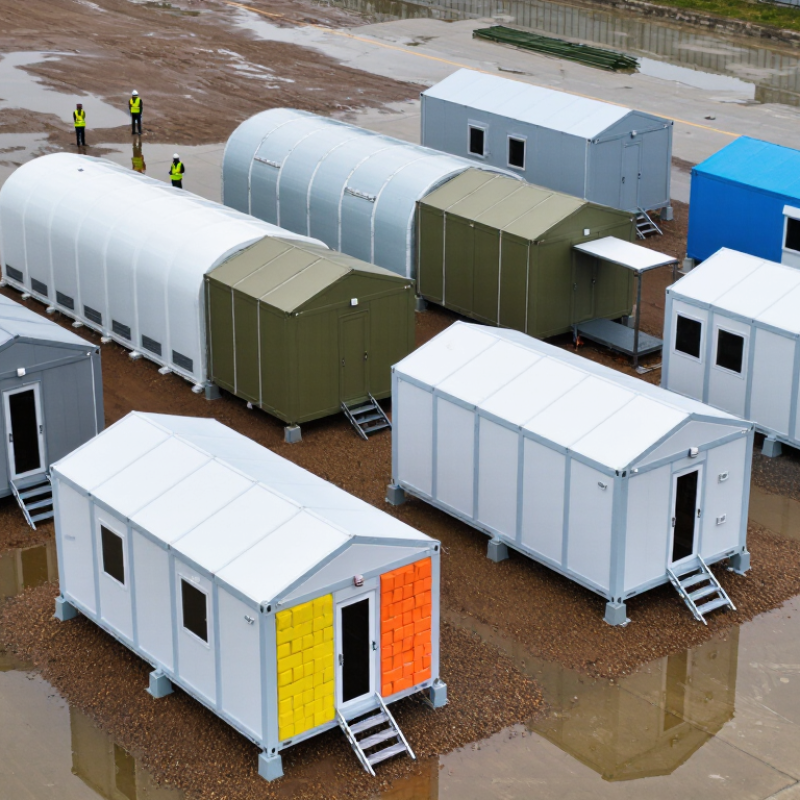
What Are Rapid-Deploy Temporary Micro Shelters?
Rapid-deploy temporary micro shelters are compact structures designed for quick setup, short-term use, and repeated relocation. They may support emergency accommodation, field work, community services, or temporary rest areas. Their small footprint helps them fit beside roads, in courtyards, or on prepared ground. Most systems combine a lightweight frame, insulated panels, weather-resistant covering, ventilation, and a lockable entrance.
“Rapid” does not mean instant. A trained crew still needs to inspect the ground, connect utilities safely, and check anchors before use.
In practical evaluations, I look beyond folded size and advertised setup time. The shelter should remain stable in wind, manage condensation, and provide enough headroom for daily tasks. Clear assembly instructions matter, especially when teams change.
Fire performance, sanitation access, drainage, and accessible entry also deserve attention. The category is not perfectly standardized, so buyers should compare test reports, material specifications, repair procedures, and service records. A shelter can look efficient on paper yet feel cramped after several hours. That is easy to underestimate.
Tips:
Measure the storage area and doorway first. Request a full setup demonstration, including bad-weather procedures. Check floor protection, ventilation openings, lighting points, and replacement-part availability. Keep a simple inspection log after every relocation. Do not rely on speed alone; comfort and safe maintenance often decide whether a temporary shelter performs well.
Key Criteria for Evaluating China’s Top 10 Micro Shelters
Evaluating China’s top ten rapid-deploy temporary micro shelters requires more than comparing prices or setup photographs. The China Statistical Yearbook 2024 reported an urbanization rate of 66.16% in 2023, increasing demand for compact emergency accommodation near dense communities. Reviewers should measure deployment time, usable floor area, thermal performance, ventilation, drainage, and repair access. Sphere standards recommend at least 3.5 square meters per person for covered living space. That benchmark exposes many attractive designs as overcrowded.
Material safety deserves equal weight. Test documents should identify flame resistance, waterproofing, wind-load capacity, insulation values, and connector durability. China’s GB 50016 fire-code framework provides a useful reference for fire separation and evacuation planning. ISO 22320 also emphasizes clear command, communication, and resource coordination during emergencies. A shelter that assembles quickly but lacks safe exits is not genuinely rapid response. It is only fast installation.
Field experience changes the ranking. Inspectors should assemble each unit in rain, record labor hours, and check floor dampness after twelve hours. Temperature logging matters. A thin wall can feel acceptable at noon and fail overnight. The UNHCR Global Trends 2024 report recorded 123.2 million forcibly displaced people worldwide, reinforcing the need for dependable temporary shelter systems. Still, published specifications can be optimistic. Independent testing, user feedback, spare-part availability, and repeated deployment trials should carry more weight than polished brochures. Cost remains important, but the cheapest shelter may create higher transport, maintenance, and replacement expenses.
China Top 10 Rapid Deploy Temporary Micro Shelters? - Key Criteria for Evaluating China’s Top 10 Micro Shelters
Comparative benchmark of commonly available temporary shelter configurations in China. Figures are representative operating ranges and should be verified against project-specific specifications.
| Rank |
Shelter Configuration |
Typical Deployment Time |
Usable Floor Area |
Typical Capacity |
Packed Volume |
Wind Resistance |
Weather Protection |
Recommended Use |
Evaluation Score |
| 1 |
Inflatable Emergency Micro Shelter |
10–30 minutes |
8–20 m² |
2–6 people |
0.8–2.5 m³ |
60–90 km/h with anchoring |
Water-resistant fabric; insulated options available |
Disaster relief, medical triage, short-term accommodation |
9.2/10 |
| 2 |
Folding Frame Cabin with Insulated Panels |
1–3 hours |
10–24 m² |
2–8 people |
3–8 m³ |
80–110 km/h with anchoring |
Good rain, wind and thermal protection |
Construction sites, security posts, field offices |
9.0/10 |
| 3 |
Pop-Up Canvas Shelter with Steel Frame |
15–45 minutes |
6–18 m² |
2–6 people |
0.5–1.8 m³ |
50–80 km/h with anchoring |
Basic rain and sun protection |
Events, temporary checkpoints, outdoor operations |
8.6/10 |
| 4 |
Flat-Pack Modular Panel Shelter |
2–6 hours |
12–30 m² |
4–10 people |
4–12 m³ |
80–120 km/h, subject to foundation |
Strong thermal and rain protection |
Worker accommodation, classrooms, clinics |
8.5/10 |
| 5 |
Rapid-Assembly PVC-Coated Fabric Shelter |
30–90 minutes |
10–40 m² |
4–12 people |
1.5–5 m³ |
70–100 km/h with anchoring |
Waterproof fabric; limited insulation |
Warehousing, logistics, temporary work areas |
8.2/10 |
| 6 |
Expandable Container-Based Micro Unit |
4–12 hours |
14–36 m² |
2–8 people |
20–35 m³ |
90–140 km/h with engineered anchoring |
High security and weather protection |
Longer-term accommodation, offices, clinics |
8.0/10 |
| 7 |
Prefabricated EPS Sandwich-Panel Room |
4–10 hours |
9–25 m² |
2–8 people |
5–14 m³ |
70–110 km/h with anchoring |
Good insulation; fire rating varies by panel |
Dormitories, site offices, temporary classrooms |
7.8/10 |
| 8 |
Folding Military-Style Field Shelter |
20–60 minutes |
8–24 m² |
4–12 people |
1–4 m³ |
60–90 km/h with anchoring |
Basic weather protection; optional liner |
Field teams, emergency accommodation, mobile operations |
7.6/10 |
| 9 |
Steel Tube and Tarpaulin Micro Shelter |
30–120 minutes |
12–50 m² |
4–16 people |
2–7 m³ |
50–80 km/h with anchoring |
Basic rain and sun protection |
Storage, shade structures, temporary distribution points |
7.2/10 |
| 10 |
Portable Privacy and Sleeping Pod |
5–20 minutes |
2–6 m² |
1–2 people |
0.2–0.8 m³ |
Indoor or sheltered outdoor use |
Limited protection; not intended for severe weather |
Evacuation centers, dormitories, temporary privacy areas |
6.8/10 |
Assessment basis: Scores consider deployment speed, transport efficiency, usable area, occupant capacity, anchoring requirements, weather resistance, insulation potential, safety, maintainability and suitability for repeated relocation. Wind figures are indicative ranges and depend on anchoring, ground conditions, structural design and local codes.
Profiles of China’s Top 10 Rapid-Deploy Shelter Solutions
Profiles of China’s Top 10 Rapid-Deploy Shelter Solutions
China’s rapid-deploy shelter sector supports emergency teams, field clinics, workers, and displaced families. The leading ten formats focus on speed, safety, mobility, and repeated use. They include inflatable medical pods, folding-panel cabins, containerized rooms, fabric-frame tents, modular dormitories, insulated box units, expandable trailers, rooftop work shelters, sanitation cubicles, and mobile kitchen shelters. Each solution serves a different operational need.
Inflatable medical pods use air beams and coated fabric for quick assembly. Folding-panel cabins create firmer rooms with lockable doors and electrical channels. Containerized rooms offer stacking strength and easier equipment installation. Fabric-frame tents provide wide interiors for meetings or temporary sleeping areas. Modular dormitories can separate beds with lightweight partitions. Insulated box units perform better in cold or hot conditions. Expandable trailers reduce transport volume but require stable ground.
Rooftop work shelters protect maintenance crews from sun and rain. Sanitation cubicles need sealed floors, drainage planning, and regular cleaning. Mobile kitchen shelters require washable surfaces, ventilation, and safe power access. Field experience shows that setup times often depend on terrain, staffing, and weather, not only design. A shelter may unfold in minutes, yet anchoring can take much longer. That detail is easy to overlook. Material quality also varies, and low-cost panels may suffer after repeated relocation. Buyers should inspect fire resistance, ventilation, spare parts, accessibility, and documented load testing before deployment.
Materials, Assembly Methods, and Deployment Speed
Rapid-deploy micro shelters in China should be evaluated by materials, assembly methods, and real deployment speed. A reliable shelter usually combines a corrosion-resistant frame, insulated wall panels, a waterproof roof, and a washable interior surface. Lightweight materials reduce transport demands, but excessive weight reduction can weaken wind resistance. Local climate and building-code reviews remain essential.
Assembly speed depends on practical details. Bolt-together frames, pre-cut panels, numbered parts, and simple connectors help crews work faster. A level, drained foundation also prevents delays. Field experience shows that a two-person team may assemble a small unit within hours, but transport, anchoring, inspection, and utility connections often take longer. The fastest shell is not always the safest shelter. I have seen layouts fail because storage space was ignored. That mistake deserves more attention.
Tips: Measure the site before delivery. Keep tools and spare fasteners together. Mark every panel clearly. Test one complete shelter before mass deployment. Leave time for corrections. A rushed installation can create leaks, unstable doors, or poor ventilation. Deployment plans should include weather checks, access routes, worker training, and post-assembly inspections. Speed matters, but dependable performance matters more.
Applications, Safety Standards, and Selection Considerations
Rapid-deploy temporary micro shelters serve many practical needs in China and overseas markets. They can support disaster relief, construction sites, medical screening, events, and remote workstations. Their small footprint helps teams install units where land and transport access are limited. Speed matters, but speed alone should never determine quality.
A reliable shelter needs documented structural calculations for local wind, snow, seismic, and rainfall conditions. Check frame connections, anchoring points, fabric flame performance, and emergency exits before purchase. Electrical systems should include grounding, overload protection, and suitable ingress protection for wet environments. Materials should have traceable test reports, clear maintenance instructions, and consistent quality records. Local building, fire, workplace, and transport rules may still apply after delivery. One certificate rarely proves complete compliance.
Selection should match the application, climate, occupancy, and expected service period. A relief unit may need fast packing and washable surfaces. A site office may require insulation, ventilation, lighting, and secure cable routing. Inspect hinges, seals, floor joints, and spare parts availability. Small defects become serious during repeated deployment. Do not trust appearance alone. A model that performs well in a dry yard may struggle on muddy ground or coastal wind. Trial assembly by the actual crew can reveal awkward steps, missing tools, or unclear instructions. No checklist is perfect, so record failures and revise the specification before placing a large order.
China Top 10 Rapid-Deploy Temporary Micro-Shelter Applications
Planning benchmark for covered living space per occupant. The 3.5 m²/person baseline follows the Sphere Handbook minimum for covered living space; higher values are practical planning allowances for colder climates, medical use, accessibility, and equipment storage.
Selection should also verify structural anchoring, wind and snow loads, fire performance, ventilation, emergency exits, waterproofing, accessibility, and local building requirements. Reference: Sphere Association, The Sphere Handbook: Humanitarian Charter and Minimum Standards in Humanitarian Response.
FAQS
They are compact structures for quick setup, short-term use, and repeated relocation. They may support emergency accommodation, field work, services, or temporary rest. “Rapid” does not mean instant.
Setup time depends on ground conditions, crew training, weather, and utilities. Workers must inspect the ground, install anchors, and check connections. Speed alone can mislead.
A common humanitarian benchmark is at least 3.5 square meters per person. Measure usable floor space, not only the outside dimensions. A shelter can feel cramped after several hours.
Check insulation, waterproofing, flame performance, wind resistance, and connector durability. Review emergency exits, floor protection, ventilation openings, and drainage. Safe entry matters.
Request a complete setup demonstration with the actual installation crew. Test the unit in rain, then inspect floor dampness after twelve hours. Record labor hours and missing tools.
Selection should consider local wind, snow, rain, seismic activity, and temperature changes. Thin walls may feel comfortable at noon but fail overnight. Coastal wind needs extra attention.
Electrical systems should include grounding, overload protection, and suitable wet-environment protection. Inspect hinges, seals, floor joints, cables, and replacement parts. Small defects grow.
Compare independent test reports, material specifications, repair procedures, service records, and user feedback. Do not rely on setup photographs or advertised prices alone. No checklist catches everything.
Conclusion
Rapid-deploy temporary micro-shelters are compact, portable structures designed to provide fast, reliable space for emergency accommodation, field offices, medical support, disaster relief, events, and remote work. This article presents a practical review of China’s top 10 solutions by examining portability, structural stability, weather resistance, interior usability, customization options, cost efficiency, and after-sales support. Each solution is evaluated according to how easily it can be transported, assembled, expanded, relocated, and stored.
The comparison also explains common materials such as reinforced fabric, insulated panels, lightweight steel, aluminum, and composite components, together with typical assembly methods and deployment times. Attention is given to ventilation, fire resistance, waterproofing, wind performance, sanitation, accessibility, and compliance with relevant safety standards. By considering application requirements, climate conditions, expected occupancy, transportation limits, installation resources, and maintenance needs, readers can make a more informed choice among Rapid-deploy temporary micro-shelters while balancing speed, safety, durability, comfort, and overall value.