
0%

Disaster relief temporary housing has become a critical global sourcing challenge. In 2023, disasters triggered 46.9 million internal displacements, according to the Internal Displacement Monitoring Centre’s Global Report on Internal Displacement 2024. These figures show why emergency shelter procurement must move beyond price comparisons. A delayed shipment can leave families sleeping under plastic sheets, beside damaged roads, during heavy rain.

The World Meteorological Organization reported 11,778 weather, climate, and water-related disasters between 1970 and 2021. Those events caused more than two million deaths and approximately US$4.3 trillion in economic losses. Demand is increasingly unpredictable. Suppliers must therefore demonstrate production capacity, regional stock, transport options, and clear quality controls. The Sphere Handbook provides widely used guidance, including minimum covered living space considerations for different climates. However, local building codes, fire safety rules, accessibility needs, and cultural expectations still require careful review.

A strong sourcing process compares more than unit cost. It examines insulation, ventilation, flooring, sanitation connections, repairability, and expected service life. It also checks whether a supplier can provide replacement parts near the response area. ISO-certified systems may support confidence, but certificates do not replace factory inspections or sample testing. No catalogue fits every emergency. A containerized unit may work near a port, while flat-pack shelters may perform better inland. The right decision depends on terrain, weather, security, workforce, and delivery time. Even experienced buyers can misjudge these variables. That is why transparent assumptions, independent verification, and realistic contingency planning should guide every global housing project.
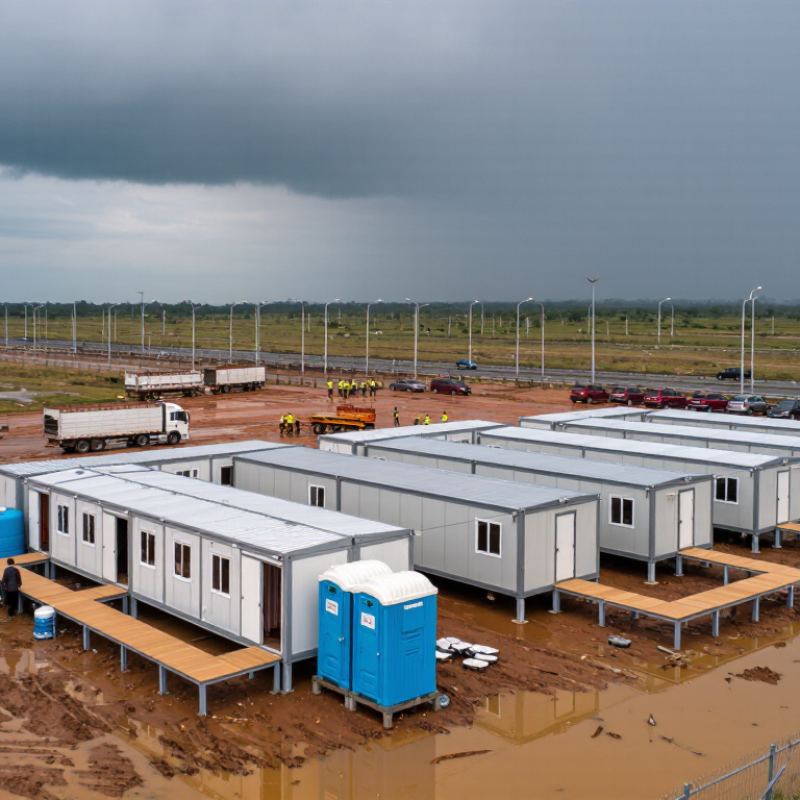
How to Source Disaster Relief Temporary Housing Globally

Define Capacity Needs Using Sphere’s 3.5 m² per Person Shelter Standard

How to Source Disaster Relief Temporary Housing Globally

Define Capacity Needs Using Sphere’s 3.5 m² per Person Shelter Standard

Temporary housing procurement should begin with usable floor area, not container counts. Sphere’s 2018 Handbook recommends at least 3.5 square metres per person for covered living space in warm climates. In colder conditions, planning may require 4.5 square metres. These figures exclude cooking areas, bathing spaces, corridors, and service rooms.

A family of five therefore needs at least 17.5 square metres of internal shelter space. Small on paper, but difficult onsite.

Capacity must reflect the affected population, not an average household. The 2023 EM-DAT annual report recorded 399 natural-hazard disasters and more than 93 million people affected worldwide. Demand can rise sharply after secondary displacement, damaged roads, or winter weather.

Procurement teams should model immediate occupancy, peak demand, and six-month retention. Use household surveys, registration records, and local authority estimates. Cross-check every source. Numbers are often incomplete.

Immediate occupancy Peak demand Six-month retention

A practical specification should state floor area, occupancy, ventilation, insulation, fire separation, accessibility, and replacement time. Measure internal dimensions after furniture, partitions, and equipment are installed. A 20-square-metre unit may provide less than 17.5 square metres of usable space. That mistake is common.

Do not overtrust the formula. Sphere describes a minimum, not a comfortable home. Cultural sleeping arrangements, disability access, climate, and privacy can require more space.

I would add a 10–15 percent contingency where land and funding allow, then document why.

The uncomfortable question remains: are we buying shelters, or merely buying capacity on a spreadsheet?

Forecast Regional Demand from EM-DAT’s 399 Disasters Recorded in 2023

How to Source Disaster Relief Temporary Housing Globally

Forecast Regional Demand from EM-DAT’s 399 Disasters Recorded in 2023

EM-DAT recorded 399 disasters in 2023, offering a useful starting point for regional housing forecasts. The figure does not equal the number of displaced households. It shows where emergencies occurred and helps identify recurring pressure points. Procurement teams should combine these records with population density, displacement data, weather exposure, and local building capacity.

Demand patterns vary sharply. Floods may require rapidly deployable units near roads, rivers, and evacuation centers. Earthquakes can create urgent shelter needs in dense cities, where damaged utilities delay return. In drought-affected areas, temporary housing may support mobile communities and relief workers rather than large urban populations. Regional analysis should therefore estimate units, floor area, transport distance, heating needs, sanitation, and expected occupancy time.

Source locally when quality and safety standards are verifiable. Regional suppliers can reduce delivery delays and simplify maintenance. International sourcing remains useful when local production is overwhelmed. Ask for fire resistance, ventilation, accessibility, wind-load performance, and documented material testing. Field experience shows that a shelter may look suitable yet fail during heavy rain or extreme heat.

Forecasts remain imperfect. EM-DAT classifications can miss smaller events or reflect delayed reporting. A single annual total cannot predict the next crisis. Use scenarios, not one fixed number. Recheck assumptions after each major alert, especially where roads, ports, or warehouses are fragile. Survivors should shape the design, although emergency schedules often leave too little time for that consultation.

Prequalify Suppliers Against UNHCR Emergency Shelter Procurement Criteria

Global disaster relief housing requires more than finding a factory with available stock. Suppliers should be prequalified against current UNHCR emergency shelter procurement criteria and relevant humanitarian standards. Check shelter dimensions, material strength, ventilation, insulation, fire resistance, and expected service life. Ask for test reports, technical drawings, and sample units. A photograph is not proof.

Review production capacity and delivery performance across different regions. Request records from recent emergency deployments, including order size, lead time, rejected quantities, and repair rates. Confirm whether the supplier can provide spare parts, clear assembly instructions, and multilingual training. Inspect the factory when possible. If travel is impossible, use independent inspections and live production checks. Small details matter, such as packed weight, pallet stability, and whether two workers can unload a crate safely.

Prequalification must also examine ethical and operational controls. Verify worker safety, traceable raw materials, quality inspections, export documentation, and transparent pricing. Require a realistic contingency plan for fuel shortages, port delays, and sudden demand. Do not rely on promises. Use measurable pass-and-fail criteria, then record every decision. No checklist is perfect. Local climate, culture, and terrain can expose weaknesses that laboratory testing misses. A shelter suitable for a dry plain may fail in heavy rain or extreme heat. Procurement teams should review field feedback after each deployment and revise their criteria accordingly.

Compare Costs, Lead Times, and IOM Cross-Border Logistics Requirements

Sourcing disaster-relief temporary housing globally requires more than comparing unit prices. UNHCR’s Global Trends 2023 reported 117.3 million forcibly displaced people worldwide. Demand can therefore rise sharply after one event. Factory pricing may look attractive, yet ocean freight, inland transport, storage, customs, and site preparation can exceed the unit cost. The World Bank’s Logistics Performance Index 2023 also shows major differences in customs efficiency and delivery reliability between markets.

Lead time must be measured from approved drawings to usable shelter. Standard modular units may ship within eight to twelve weeks, while customized insulation, medical fittings, or fire systems can add several weeks. Air freight is faster but rarely economical for complete units. Sea freight reduces cost, but port congestion and inland bottlenecks create uncertainty. Build a buffer. A seven-day delay can leave families exposed.

Cross-border planning should follow IOM and humanitarian logistics practices. Prepare commercial invoices, packing lists, certificates of origin, HS codes, consignee details, and import permits before dispatch. Confirm temporary-import rules, tax exemptions, inspection procedures, and delivery responsibilities with local authorities. Use clear Incoterms and a documented handover point. WFP logistics assessments repeatedly show that roads, warehouses, and border capacity can limit delivery more than manufacturing. This is easy to underestimate. Cost comparisons also need lifecycle figures, including repair parts, dismantling, waste handling, and return freight. A cheaper shelter may become the costlier choice after six months.

The chart compares indicative procurement costs and delivery lead times for deployable temporary housing by sourcing region. Costs represent estimated unit costs in USD for a basic family-sized shelter or modular accommodation package, excluding land preparation, installation, local taxes, and last-mile distribution. Lead times include manufacturing, international transport, customs clearance, and delivery to the response area.

For cross-border movements, humanitarian logistics teams typically prepare a commercial invoice, packing list, certificate of origin, transport document, consignee details, import or duty-exemption approval, product specifications, and any required safety or conformity certificates. Actual costs and lead times vary according to specifications, border capacity, customs rules, transport availability, and emergency access conditions.

Verify Safety Through Sphere Standards and Local Building Regulations

Sourcing temporary housing after a disaster requires more than comparing prices and delivery dates. Safety must be verified before units leave the factory. The Sphere Handbook provides practical guidance for shelter, settlement, water, sanitation, and protection. It helps teams assess space, privacy, ventilation, weather resistance, and access for vulnerable residents.

Local building regulations remain legally controlling. Check requirements for wind loads, snow loads, earthquakes, fire separation, electrical systems, foundations, and emergency exits. Confirm whether permits are required for temporary structures. A qualified local engineer should review drawings and inspect sample units. Do not rely only on supplier certificates. Documents may be outdated, incomplete, or unsuitable for local conditions.

A useful inspection includes a trial installation on the actual site. Measure door widths, floor levels, drainage paths, and distances between units. Test locks, smoke alarms, heating, lighting, and water connections. Inspect seams after heavy rain, when possible. Ask who will repair damaged panels and how quickly replacement parts can arrive. Small failures become serious in crowded settlements.

A checklist can still miss human needs. A narrow entrance may block a wheelchair. A hot sleeping unit may increase health risks. Local residents should review the layout before deployment. Their feedback may challenge the original plan, and that is valuable. Safety verification is not a single approval; it is repeated evidence from standards, regulations, inspections, and real use.

FAQS

How can disaster records help forecast temporary housing demand?

Disaster records show recurring pressure points and affected regions. They do not show exact household displacement. Combine them with population, weather, mobility, and local capacity data.

Why should housing forecasts use scenarios instead of one fixed number?

Annual disaster totals cannot predict the next crisis. Reporting may be delayed or incomplete. Use low, medium, and high-demand scenarios, then revise them after major alerts.

What housing is suitable after floods?

Flood response often needs rapidly deployable units near roads and evacuation centers. Raise floors where drainage is poor. Check seams after heavy rain.

What housing challenges appear after earthquakes?

Dense cities may need urgent shelter after buildings and utilities are damaged. Units require safe access, lighting, sanitation, and reliable heating. Return may take longer than expected.

When is local sourcing preferable?

Local suppliers can shorten delivery times and simplify repairs. Use them when quality and safety evidence is verifiable. Local production may still become overwhelmed.

What should buyers check before approving temporary housing?

Check fire resistance, ventilation, accessibility, weather performance, and tested materials. Review wind, snow, earthquake, and electrical requirements. Supplier documents alone are not enough.

How should a temporary housing unit be inspected?

Install a sample unit at the actual site. Measure doors, floor levels, drainage, and spacing. Test locks, alarms, heating, lighting, and water connections.

How can residents influence the housing design?

Residents should review layouts before deployment. A narrow entrance may block wheelchair access. A hot sleeping unit may increase health risks. Plans can be wrong. Reconsider them.

Conclusion

Sourcing disaster relief temporary housing globally begins with a clear assessment of shelter capacity. Planners should use the benchmark of 3.5 square meters per person to estimate required living space, then forecast regional demand by reviewing disaster frequency, population exposure, displacement patterns, and available emergency resources. Data from 399 recorded disasters in 2023 can support a practical demand model while allowing adjustments for seasonal risks and local conditions.

Suppliers should be prequalified through transparent checks covering structural quality, fire safety, weather resistance, production capacity, documentation, and ethical labor practices. Procurement teams should compare total costs, manufacturing and delivery lead times, storage needs, customs procedures, and cross-border transport requirements. Before deployment, every unit should be verified against recognized humanitarian shelter standards and applicable local building regulations. This process helps ensure that disaster relief temporary housing is safe, scalable, compliant, and suitable for affected communities in different regions.

Amelia

Amelia

Amelia is a professional marketing specialist dedicated to helping businesses understand products, identify meaningful opportunities, and make confident decisions in a changing market. With strong knowledge of the company’s product portfolio, customer needs, and industry trends, she transforms......