When disasters, conflict, or sudden displacement remove access to safe housing, governments must act quickly and carefully. Government emergency housing solutions can include converted hotels, modular shelters, rental assistance, public buildings, and rapid rehousing programs. Each option serves a different need. A family may need a private room, electricity, and nearby schools. An older adult may require accessible entrances and medical support. A person leaving a flooded neighborhood may need storage, transport, and help replacing documents.
Across the world, emergency responses reveal both practical strengths and difficult gaps. Japan has developed temporary modular homes after earthquakes. European cities have used hotels and vacant buildings during housing crises. Some governments provide cash assistance, while others coordinate host families or community shelters. These approaches work best when local agencies, engineers, health professionals, and residents share reliable information. Safety inspections matter. So do privacy, sanitation, child protection, and clear exit plans.
Speed alone is not enough. A shelter can open within days yet fail without heating, security, or follow-up housing. It may also overlook people with disabilities, migrants, or families without internet access. This article examines ten government emergency housing solutions worldwide, focusing on how they operate in real conditions. The comparison is not perfect. Countries face different laws, budgets, climates, and risks. Still, careful evidence can show which measures protect dignity, reduce homelessness, and support recovery beyond the first night. The strongest lesson may be simple: emergency housing must be temporary, but public responsibility cannot be.
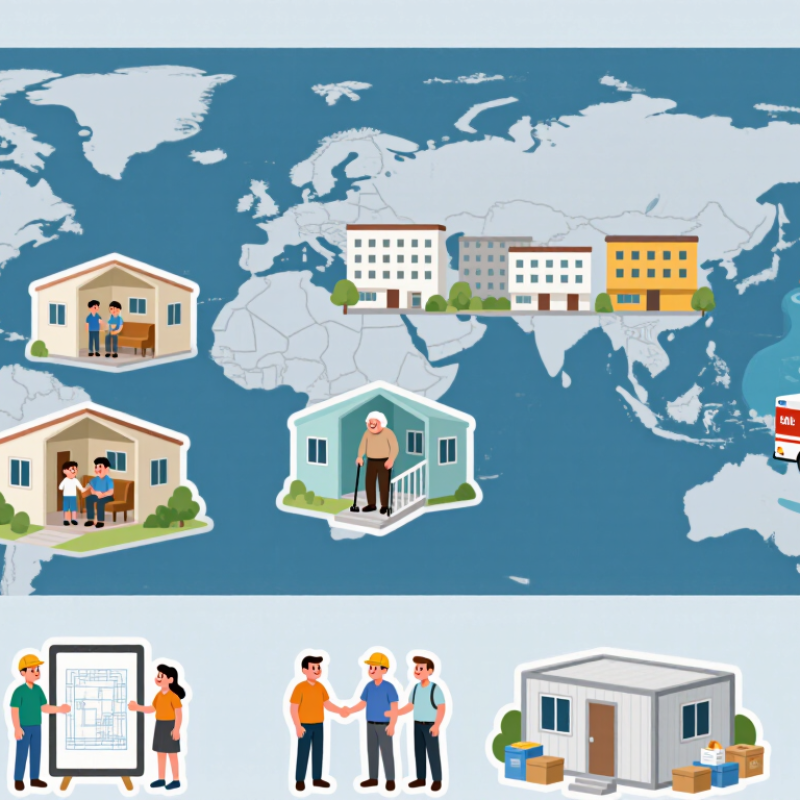
Emergency housing is more than a roof after a disaster. It provides immediate safety, privacy, basic services, and a path toward stable accommodation.
The Sphere Handbook describes shelter as a protection measure, not simply a temporary structure. This distinction matters when governments design evacuation centers, rental support, modular units, or serviced camps.
The scale is severe. UNHCR’s Global Trends 2023 reported 117.3 million forcibly displaced people worldwide by the end of 2023.
Internal displacement also remains substantial. The Internal Displacement Monitoring Centre recorded 46.9 million disaster-related internal movements in 2023.
These figures count movements, not unique people. That difference is easy to miss.
UN-Habitat estimates that about 1.6 billion people lack adequate housing, including many living in overcrowded or informal settlements. Emergency programs must therefore consider existing housing insecurity, not only sudden disasters.
A household may need a weatherproof room, nearby water, accessible toilets, and secure tenure. Data from displacement and shelter reports can guide those choices, but reporting remains uneven across regions.
Some populations disappear from official counts. That weakness deserves more attention.
Emergency housing systems work best when rent support reaches households before eviction becomes unavoidable. Evidence reviewed by the OECD and World Bank shows that rapid cash transfers can protect tenants during income shocks. Payments may cover rent, deposits, utility bills, or temporary accommodation. A family facing a sudden job loss might receive support within ten days, rather than navigating a lengthy application process.
Speed matters, but design matters too. Digital payments can move money quickly, while local offices remain essential for people without bank accounts, stable internet, or formal addresses. Clear eligibility rules reduce confusion. Simple proof, such as a lease and recent income record, can limit delays. However, strict checks may exclude informal workers. That weakness deserves attention. Cash can also raise local rents if housing supply remains tight. Governments therefore need rent monitoring, temporary housing units, and cooperation with community housing providers.
Reliable programs publish payment timelines, appeal routes, and basic results. Independent audits can test whether assistance reaches older people, migrants, families with children, and disabled residents. Data should protect personal privacy. Experience from past crises suggests that flexible aid often performs better than one fixed benefit. Yet flexibility can create uneven decisions between regions. Local judgment helps. It can also produce unfairness. Better training, shared standards, and regular public review can narrow that gap.
Government emergency housing works best when speed does not erase dignity. UNHCR guidance emphasizes safe space, privacy, ventilation, lighting, and access to water and sanitation. A common planning benchmark is about 3.5 square metres per person, but climate and household needs can change it. Local assessments matter.
Temporary shelters can arrive within 48 hours to two weeks after funding, procurement, and transport are confirmed. They need flat ground, drainage, heating or cooling, and safe separation between cooking and sleeping areas. A family shelter should include lockable entry points and enough internal height for daily movement. Small details matter.
Modular homes usually take four to twelve weeks, including manufacturing, delivery, foundations, utility connections, and inspection. Remote locations may require longer schedules. A finished unit is not automatically a suitable home. Accessibility, child protection, cultural privacy, and winter performance must be checked on site. Some projects still underestimate road access and land preparation. That is a costly lesson. UNHCR-aligned monitoring should collect resident feedback, record defects, and allow repairs after handover, rather than treating delivery as the final measure of success.
| Rank | Country / Region | Government Housing Solution | Primary Use Case | Typical Unit or Site Capacity | Indicative Delivery Time | UNHCR-Aligned Planning Measures | Key Delivery Feature |
|---|---|---|---|---|---|---|---|
| 1 | Türkiye | Container-based temporary housing settlements | Large-scale displacement after earthquakes and other sudden-onset disasters | Approximately 16–24 m² per household unit; sites commonly include shared schools, clinics and sanitation | 2–8 weeks for prepared sites and utility connections | Target at least 3.5 m² of covered living space per person; increase toward 4.5 m² in cold climates where feasible | Standardized units can be transported, grouped and connected to planned infrastructure |
| 2 | Japan | Prefabricated temporary housing villages | Earthquakes, tsunami evacuation and severe weather displacement | Commonly about 20–40 m² per household, with accessible units for older people and people with disabilities | 1–3 months depending on land, permits and utilities | Separate sleeping and living areas where possible, weatherproofing, ventilation, privacy and safe access | Factory-produced components support consistent quality and rapid assembly |
| 3 | United States | Government-managed temporary units and manufactured housing | Floods, hurricanes, wildfires and major storm-related displacement | Usually one household per unit; unit size varies by household composition and accessibility requirements | 2–12 weeks after inspection, site approval and utility preparation | Provide sufficient covered area, safe water, sanitation, heating or cooling, fire safety and protection from the elements | Can be deployed on existing sites or organized into temporary residential communities |
| 4 | Germany | Modular accommodation centres and converted public buildings | Sudden refugee arrivals and short- to medium-term displacement | Shared facilities are common; sleeping areas are planned to preserve privacy and separate families where possible | 4–16 weeks for modular facilities; shorter for adapted buildings | UNHCR principles include adequate space, lighting, ventilation, privacy, security and access to WASH facilities | Uses temporary buildings, vacant public assets and modular extensions in combination |
| 5 | United Kingdom | Local-authority interim accommodation and modular housing | Homelessness emergencies, asylum accommodation and temporary relocation | Self-contained units are preferred for families; shared facilities may be used for short stays | 4–20 weeks depending on planning, procurement and utility works | Minimum planning should address usable floor area, household privacy, heating, ventilation, sanitation and safeguarding | Modular blocks can be installed on publicly controlled land and later removed or repurposed |
| 6 | Chile | Transitional emergency homes and prefabricated shelter units | Earthquakes, wildfires, floods and loss of permanent housing | Frequently designed for one household, with compact layouts and basic cooking and sanitation facilities | 2–10 weeks for simple units when land and services are available | Weather resistance, minimum covered living space, safe water, sanitation, drainage and protection from cold or heat | Lightweight construction is suitable for rapid transport to dispersed disaster-affected communities |
| 7 | Indonesia | Government transitional shelters and relocation housing | Earthquakes, volcanic eruptions, tsunamis and flood displacement | Typically planned for individual families, with community-level water, bathing and sanitation facilities where needed | 2–12 weeks for temporary units; longer for serviced relocation sites | Plan for at least 3.5 m² per person, climate-appropriate ventilation, drainage, lighting and safe access | Solutions can combine locally sourced materials, prefabricated components and permanent-site planning |
| 8 | Bangladesh | Cyclone-resistant emergency shelters and raised housing platforms | Cyclones, storm surges, river flooding and seasonal displacement | Communal shelters accommodate large populations; household units are often compact and elevated above flood levels | 1–8 weeks for basic shelter upgrades or temporary structures | Prioritize flood safety, ventilation, covered space, accessible sanitation, lighting and protection from wind and rain | Raised sites and multipurpose shelters provide both emergency refuge and community facilities |
| 9 | Australia | State-led temporary modular accommodation and recovery housing | Bushfires, floods, cyclones and regional housing disruption | Self-contained cabins or modular units generally house one household, with accessible options where required | 4–16 weeks after site assessment, approvals and service installation | Use climate-responsive design, adequate ventilation, thermal comfort, privacy, fire safety and accessible sanitation | Units can be placed on prepared government land or integrated into existing temporary villages |
| 10 | New Zealand | Rapid-build temporary homes and managed emergency accommodation | Earthquakes, floods, severe storms and community relocation | Small self-contained homes or serviced temporary sites for individuals and families | 4–16 weeks for rapid-build units, subject to land and infrastructure availability | Provide safe covered space, insulation, heating, ventilation, privacy, potable water and accessible sanitation | Lightweight modular construction supports relocation and later conversion to longer-term housing |
Top 10 Government Emergency Housing Solutions Worldwide
Public Housing Conversion and Land Solutions: Ten-Country Capacity Data
Emergency housing works best when governments measure buildings before announcing targets. A six-month planning scenario could identify 18,000 units in Canada, 25,000 in the United Kingdom, and 30,000 in Germany. France may convert 22,000 public rooms, while the Netherlands could prepare 12,000 compact units. These figures are planning estimates, not official inventories. Each site still needs fire checks, utilities, accessibility reviews, and local approval.
Land strategies add flexibility. Japan could release 35,000 units through vacant public buildings and serviced plots. South Korea may support 28,000 modular homes near transport corridors. Australia could prepare 16,000 temporary units on government land, while New Zealand may identify 7,000 suitable sites. Chile could combine 20,000 converted homes with fast-serviced urban parcels. Water, drainage, and safe pedestrian access matter more than empty land alone.
The numbers are useful, but imperfect.
Conversion is often cheaper than new construction, yet older buildings may hide expensive repairs. Governments should publish location, condition, cost, and delivery dates for every proposed unit. Independent engineers can verify capacity claims. Local residents also need clear notice, especially where schools and clinics already face pressure. A vacant building is not automatically a home. It becomes housing only after safety, management, and long-term maintenance are funded.
Comparing the top ten models requires more than counting beds. Field assessments commonly examine cost per household, setup speed, durability, and equity.
Emergency tents are the fastest and cheapest option, but heat, privacy, and accessibility remain weak. Converted public buildings provide stronger protection and community access, although repairs can delay opening. Hotel leasing offers immediate rooms and bathrooms, yet nightly costs rise quickly and locations may exclude rural families.
Modular cabins balance speed, durability, and basic privacy. Their foundations, transport, and utility connections increase costs. Shipping-container units can withstand harsh weather when properly insulated, but poor ventilation creates serious health concerns. Collective reception centers are efficient during sudden displacement, though crowded sleeping areas reduce dignity. Rental assistance and cash grants often score well on equity because families choose safer locations, but local housing shortages can push prices upward.
Transitional villages usually perform better on durability than tents, especially with insulated panels and drainage. Permanent public housing offers the strongest long-term value, but construction can take years. Host-family programs are comparatively affordable and socially supportive, yet monitoring safety and household capacity is difficult. Equity metrics should include wheelchair access, gender-sensitive privacy, child protection, travel distance, and equal documentation requirements. My practical concern is simple: speed is often measured on opening day, not after three months. A shelter may open quickly and still fail when rain enters, transport disappears, or families cannot afford the journey to work.
It offers immediate safety, privacy, lighting, water, sanitation, and protection from weather. A roof alone is insufficient.
Around 117.3 million people were forcibly displaced by the end of 2023. Another 46.9 million disaster-related movements occurred that year.A movement is not always a new person. That distinction matters.
Temporary shelters may arrive within 48 hours to two weeks after funding, purchasing, and transport are arranged. Flat ground and drainage are essential.Fast, but fragile.
Modular homes often require four to twelve weeks, including delivery, foundations, utility connections, and inspections. Remote areas may take longer.Road access is easily underestimated.
A common planning guide suggests about 3.5 square metres per person. Shelters also need lockable doors, ventilation, lighting, water, and toilets.Privacy matters daily.
Emergency tents usually open fastest and cost less. However, they may provide weak heat control, privacy, and wheelchair access.Speed has limits.
Converted public buildings can offer safer rooms and shared services. Hotel leasing provides immediate bathrooms and beds, but costs can rise quickly.Rural families may lose access.
Rental assistance and cash grants let families choose safer locations. Yet limited housing can raise prices and reduce real choice.Choice is sometimes narrow.
They should check defects, rain protection, transport access, repair times, accessibility, privacy, and residents’ feedback after three months.Opening day proves little.
This guide examines Government emergency housing solutions used to support people displaced by conflict, disasters, economic shocks, and sudden housing shortages. It defines emergency housing through displacement and shelter indicators, then explains how rapid rental assistance and direct cash support can help households secure safer accommodation while reducing pressure on temporary facilities. The discussion also covers temporary shelters and modular homes, focusing on minimum standards, delivery timelines, adaptability, and the transition from immediate protection to more stable housing.
The article compares public housing conversion, vacant-building reuse, and land allocation as ways to expand capacity across different national contexts. Its final framework evaluates ten models according to cost, speed, durability, administrative feasibility, and equity. By weighing these measures together, policymakers can identify solutions suited to urgent crises while avoiding prolonged dependence on temporary arrangements. The central conclusion is that effective emergency housing requires a balanced mix of financial support, rapid construction, available land, accountable coordination, and long-term pathways to secure housing.