
Precision-engineered, ISO & CE certified prefabricated structures designed for commercial development, rapid disaster response, industrial housing, and luxury resort expansion.
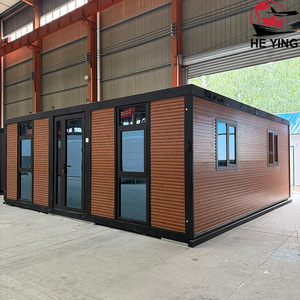
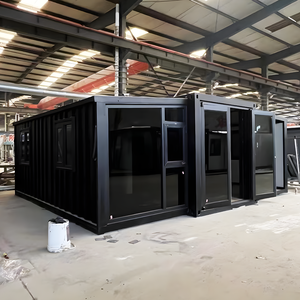
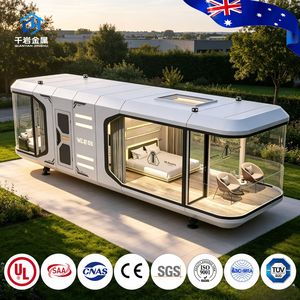
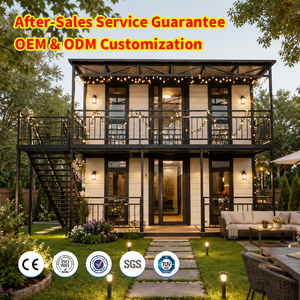
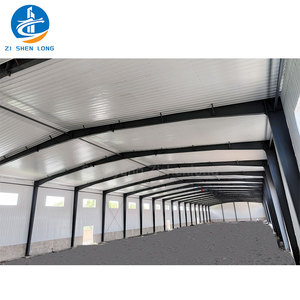
In an era dominated by rapid urban development, emergency housing demands, and localized labor shortages, international procurement entities require modular construction solutions that bridge factory precision with structural durability. As premier OEM/ODM folding container manufacturers and exporters, our manufacturing philosophy centers on rigorous structural engineering, extreme thermal management, and rapid logistics optimization.
Our core production methodology incorporates a 70% off-site factory build combined with a 30% on-site deployment protocol. By completing structural frames, insulation envelopes, electrical conduits, and interior plumbing under tightly controlled factory conditions, we eliminate up to 80% of weather-related installation delays and structural variance inherent to traditional construction sites.
Information Gain Insight: Unlike standard flat-pack units that rely on superficial spot-welding, our OEM folding container systems utilize cold-formed Q235B/Q355B galvanized steel profiles integrated with continuous robotic seam welding. This delivers a structural yield strength capable of enduring seismic forces up to Grade 8 and sustained wind loads exceeding 180 km/h.
Every folding container unit exported from our facilities is manufactured to rigorous ISO 9001, CE, and HUD-compliant engineering standards. The structural skeleton features hot-dip galvanized steel frames treated with a 120g/m² zinc coating, offering superior resistance against galvanic corrosion, salt spray, and extreme humidity in coastal environments.
Built with heavy-duty Q355B structural steel chassis, providing zero deflection during repeated folding cycles and extended ocean transit.
Class-A non-combustible PIR and Rockwool sandwich wall panel options engineered to withstand direct heat up to 1,400°F.
Multi-layered thermal barrier configurations achieving R-38 roof, R-21 wall, and R-22 floor insulation values for off-grid thermal efficiency.
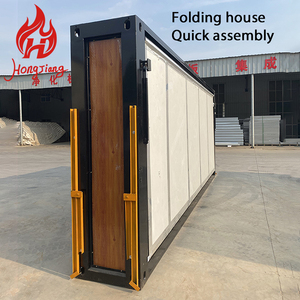
For international importers, EPC contractors, and government procurement offices, freight cost is often the decisive factor influencing modular project feasibility. Traditional 20ft shipping container units incur substantial shipping overhead because they transport empty space. Our proprietary 18-inch flat-pack folding architecture fundamentally restructures international shipping economics.
By engineering heavy-duty mechanical hinges and elastomeric synthetic rubber seals along structural fold lines, our containers compress down to an ultra-compact 18-inch high profile. This allows procurement officers to load up to 10 fully assembled folding units into a single 40ft HQ ocean container truck chassis, reducing international freight expenditure by up to 75% per unit.
| Evaluation Parameter | Standard Shipping Container | Traditional Modular Prefab | OEM/ODM Folding Container (Our System) |
|---|---|---|---|
| Freight Density | 1 Unit / 20ft Slot | 2 Units / 40ft HQ | 10 Units / 40ft HQ (18" Flat-Pack) |
| On-Site Assembly Time | 4 - 8 Hours | 1 - 2 Days | 4 Minutes (2-Person Deployment) |
| Thermal Insulation Value | Uninsulated (Basic Corrugated) | R-11 to R-15 Standard | R-21 Wall / R-38 Roof (Energy Star) |
| Structural Warranty | 1 - 2 Years | 3 - 5 Years | 10-Year Heavy Structural Warranty |
| Financing / Code Compliance | Non-Compliant | Varies by Supplier | HUD-Compliant / Fannie Mae / FHA Ready |
The global prefabricated housing market is experiencing a profound technological convergence. As an authoritative manufacturer and exporter, our R&D divisions actively drive three foundational structural trends reshaping the OEM/ODM landscape:
Traditional steel modular units suffer from high thermal conductivity across steel studs, causing internal condensation and HVAC inefficiency. Modern OEM folding container design integrates polyisocyanurate (PIR) thermal breaks between structural beams and interior wall panels. Dual-pane Low-E argon-filled windows combined with smart thermostat controls ensure zero micro-climate moisture accumulation and dramatically lower heating/cooling energy loads.
The modern folding container is no longer a passive shelter; it is an active energy ecosystem. Our custom ODM manufacturing lines allow for seamless factory pre-wiring of flexible rooftop monocrystalline solar arrays, lithium-iron-phosphate (LiFePO4) storage walls, and greywater filtration loops. This enables rapid deployment in disaster management zones and remote mining camps without requiring immediate access to municipal electrical grids.
Commercial workforce providers and government agencies increasingly demand accessible, smart-managed environments. Our latest product iterations feature integrated keyless RFID/biometric door mechanisms, standardized wide-door ADA clearance profiles, and modular partition walls that can be reconfigured on-site without compromising structural shear capacity.
Navigating global supply chain fluctuations requires strategic foresight from commercial purchasing agencies. Over the next decade, container procurement is pivoting from low-cost initial bids toward Lifecycle Total Value Assessment. Importers who align with advanced OEM/ODM partners leverage several critical market trends:
Supply Chain Risk Mitigation: Leading global importers are moving away from single-sourcing local assemblers and adopting direct factory partnerships with established Chinese OEM exporters equipped with comprehensive raw steel inventory reserves and automated CNC laser-cutting centers.
Key procurement vectors currently driving high-volume container exports include:
Direct responses to critical engineering, logistics, and compliance inquiries encountered during global procurement programs.
Request comprehensive engineering CAD drawings, structural test reports, wholesale factory-direct pricing tier lists, and detailed product catalogs tailored for your specific region or tender requirements.
Get Catalog