Expandable Container Manufacturer & Factories in the Israel Market

An Industrial Whitepaper & Strategic Engineering Guide on Modular Infrastructure, Rapid-Deploy Thermal Structures, and Certified Israeli Building Compliance

Certified Industrial Solutions

Engineered Modular Products for Israel

Explore our factory-direct expandable container houses, steel structure workshops, and rapid-deployment modular cabins designed for high energy efficiency and structural resilience.
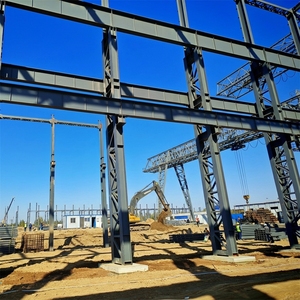
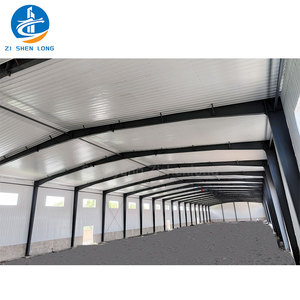
Prefab Steel Structure Building Modular Workshop Metal Frame Plants ISO CE
Prefab Steel Structure Building Modular Workshop Metal Frame Plant
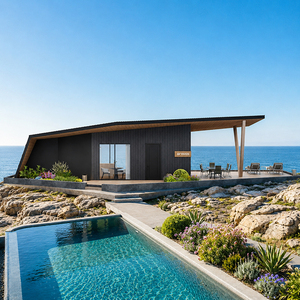
Irregular Shape Luxury Aluminum Alloy Tiny House Modular Prefab
Irregular Shape Luxury Aluminum Alloy Modular Tiny House with Kitchen & Bathroom
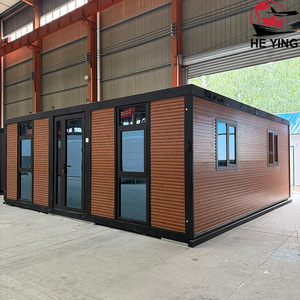
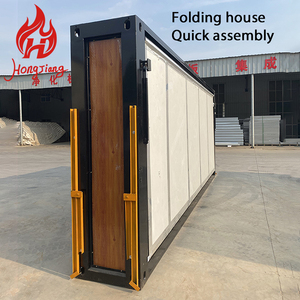
40Ft 20Ft Luxury Prefab Villa Foldable Expandable Container House
40Ft / 20Ft Luxury Prefab Villa Expandable Container House (2-5 Bedrooms)
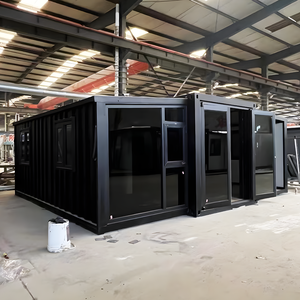
Custom 40Ft 20Ft Prefabricated Mobile Living Container Expandable House
Custom 40Ft / 20Ft Mobile Living Expandable Container 4-Bedroom Steel House
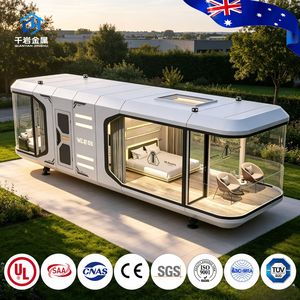
High Quality Prefab Capsule Container House Space Cabin Camping
High Quality Space Capsule Modular Container Cabin for Camping & Living
20/40 ft Modular Home Luxury Tiny House Prefabricated Expandable House
20/40ft Fully Furnished Expandable Container House for Commercial Office & Retail
Prefabricated Steel Structure Warehouse Factory Modular Industrial Building
Industrial Steel Structure Warehouse Factory & Modular Heavy Metal Frame
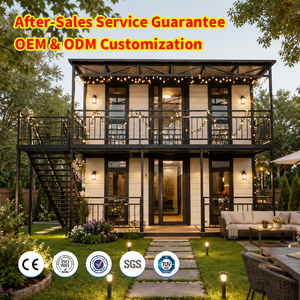
Light Steel 4 Bedroom Hurricane Proof Foldable Expandable Storage Container Villa
Hurricane-Proof 4 Bedroom Expandable Storage Office Villa Container Home
70%
Off-Site Precision Construction
1,400°F
Fire-Resistance Rating
R-38
Roof Insulation Index
10 Units
Packed Per Standard Flatbed
Comprehensive Market Insights

1. The Expanding Demand for Modular Construction in Israel

The Israeli construction sector is undergoing a structural paradigm shift driven by acute land development timelines, severe labor constraints, and an imperative demand for high-durability, rapid-deployment architectural solutions. Modern expandable container technology has emerged as a cornerstone solution across Israel's unique urban and rural topographies—spanning from the densely populated Mediterranean coastline around Tel Aviv and Haifa to the extreme climate zones of the Negev Desert and the Arava Valley.

As an authoritative global manufacturer of high-precision expandable container structures, our production lines combine off-site industrial robotics with certified structural engineering. By moving 70% of the build process into controlled factory environments, we drastically eliminate site disturbance, mitigate unpredictability from weather or local labor shortages, and deliver move-in-ready living and commercial spaces in a fraction of traditional construction cycles.

2. Engineering for Israel’s Microclimates and Regulatory Standards

Deploying prefabricated architecture in Israel requires rigorous technical adaptation to comply with local building regulations, environmental exposure ratings, and strict safety guidelines set by municipal planning authorities and the Standards Institution of Israel (SII).

Thermal Insulation & Energy Efficiency

Given Israel’s high solar irradiance and desert thermal swings, our expandable containers feature advanced thermal envelopes using PIR/PU insulated sandwich panels, Low-E double glazing, and reflective roof coats achieving R-38 roof, R-21 wall, and R-22 floor insulation ratings for Energy Star certification.

Seismic & Wind Structural Integrity

Engineered with hot-dip galvanized steel chassis and high-tensile light steel framing, our expandable modular houses are tested to withstand hurricane-force winds up to 160 km/h and comply with Seismic Zone 4 structural stability requirements.

Corrosion-Resistant Coastal Protection

Structures destined for Mediterranean coastal zones feature multi-layer marine-grade anti-corrosion primers and powder coatings capable of resisting harsh salt spray, preserving structural integrity for over 30 years.

3. Specialized Application Scenarios Across Israel

Expandable container houses provide unprecedented versatility, serving diverse operational and residential demands across the country:

  • Agricultural & Tech Hub Accommodation in the Negev & Arava: Providing comfortable, climate-controlled, off-grid-ready housing for agricultural tech researchers, solar energy project teams, and seasonal farm managers. Units can be integrated with rooftop photovoltaic panels and water recycling setups.
  • Kibbutz & Moshav Housing Expansion: Modern expandable container homes offer rapid housing solutions for growing rural communities. Featuring 2-bedroom to 5-bedroom layouts, modern kitchens, fully equipped bathrooms, and luxury vinyl tile (LVT) flooring, these units blend seamlessly into community environments.
  • Urban Infill & Commercial Tech Workspaces: In commercial centers like Tel Aviv, Herzliya, and Haifa, expandable containers serve as modern popup retail shops, mobile sales offices, design studios, and temporary site management headquarters.
  • Emergency Response & Rapid Civilian Relief Housing: Designed to fold down to an ultra-compact package of just 18 inches high during transport, up to 10 units can be stacked on a single flatbed trailer, enabling government agencies and non-profit organizations to deploy rapid emergency shelters within hours after crisis events.

4. Comparative Technical Specifications Matrix

To help municipal developers, commercial contractors, and private buyers in Israel evaluate building methodologies, the table below compares factory-built expandable containers against traditional concrete and standard flat-pack containers:

Performance Metric Expandable Container Homes Traditional Reinforced Concrete Standard Non-Expandable Flat-Pack
On-Site Assembly Time 10 – 15 Minutes per unit 12 – 18 Months 4 – 6 Hours per unit
Usable Interior Area Fully Expanded: 36m² – 74m² Fixed Site Footprint Fixed 14m² – 28m²
Thermal Insulation (R-Value) R-21 Walls / R-38 Roof (High Efficiency) Variable / Requires Insulation Layer R-8 to R-12 (Basic Insulation)
Shipping Logistics Flat-packs to 18" height; 10 units/truck Raw building material transport 1 to 4 units per truck
Environmental & Footprint Impact Zero site trace; Reusable & Relocatable High waste, permanent foundation disrupt Relocatable but limited space expandable
Structural Certifications ISO, CE, HUD-compliant, Wind & Seismic rated Subject to local site inspection only Basic ISO container standard

5. Israeli Procurement & Import Logistics Guide

Procuring modular expandable containers directly from our international factories guarantees wholesale pricing, customized spatial configurations, and superior quality control. Freight shipment to major Israeli maritime hubs—specifically the Port of Ashdod and the Port of Haifa—is streamlined through standard 40-foot High Cube (40HQ) container shipping channels.

Our dedicated engineering team collaborates directly with Israeli project managers, providing complete CAD architectural drawings, structural calculation reports, and material safety data sheets required for local municipal permitting. From structural steel frame galvanization to electrical conduit pre-wiring compliant with 230V/50Hz specs, every unit is verified prior to dispatch.

Frequently Asked Questions

Essential answers for Israeli developers, contractors, and municipal buyers purchasing expandable containers.

What are the local building permit requirements for expandable containers in Israel?
In Israel, placing any modular living or office container on private or commercial land generally requires a building permit from the local planning committee (Vadat Tichnun). Permanent foundations or residential use require compliance with standard building regulations. Temporary commercial setups or agricultural land deployments may follow simplified approval pathways. Our engineering team supplies comprehensive structural and architectural drawings to support your permit application.
How do expandable containers handle extreme heat in regions like the Negev and Arava?
Our expandable container units are specifically constructed with heavy-duty polyurethane (PU) or rockwool insulated sandwich panel walls, dual-pane Low-E tempered safety glass windows, and reflective exterior coatings. This creates an airtight thermal envelope with insulation values up to R-38 for roofs and R-21 for walls, significantly reducing air conditioning electricity costs during high-temperature months.
What is the delivery timeline to the Port of Ashdod or Port of Haifa?
Factory production typically takes 15 to 25 days depending on customization, total unit count, and interior finishes. Maritime transport from our port to Ashdod or Haifa generally takes 20 to 30 days. In total, complete project delivery can be achieved within 40 to 60 days from initial deposit and drawing approval.
Are the electrical and plumbing systems configured for Israeli standards?
Yes. All electrical wiring, sockets, circuit breakers, and switches can be customized pre-factory to match 230V, 50Hz electrical standards used in Israel. Plumbing systems are pre-installed inside the modular core with standard ISO/CE certified PPR and PVC piping for seamless connection to municipal water networks or septic tanks.
Can expandable container houses be relocated after installation?
Absolutely. One of the primary advantages of expandable containers is their mobility. The structure can be folded back down into its compact transport state within hours using basic equipment and moved to a new site via a standard flatbed crane truck, leaving zero environmental footprint behind.

Partner with a Leading Global Expandable Container Manufacturer

Ready to deploy high-durability, energy-efficient modular housing or commercial projects in Israel? Contact our expert engineering team for customized factory pricing, technical specs, and shipping schedules.

Send an Inquiry