
Factory-built modular systems designed for high structural loads, rapid site assembly, and seamless transportation through Mexican ports and logistics bypasses.
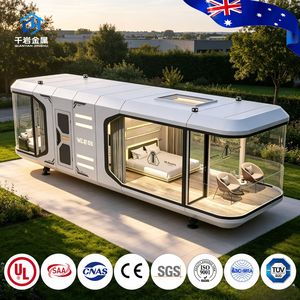
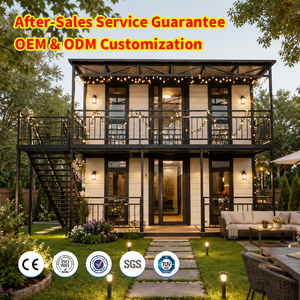
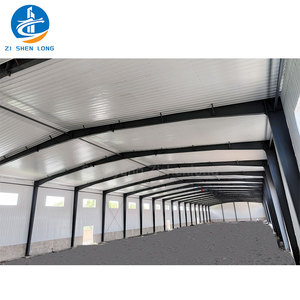
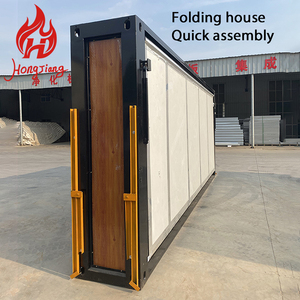
Mexico City’s unique geography—ranging from high-altitude seismic lakebeds to dense urban centers and surrounding industrial corridors—requires specialized off-site engineering. Here is how our manufactured structures perform across key regional micro-environments.
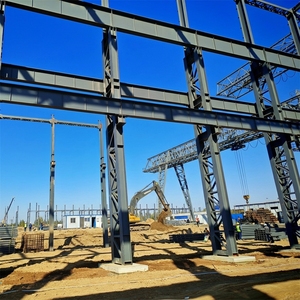
Central CDMX presents extreme land scarcity combined with strict load limitations on soft lakebed subsoils (Zona del Lago - Zone III). Traditional concrete adding stories to existing buildings is often structurally unviable due to weight constraints.
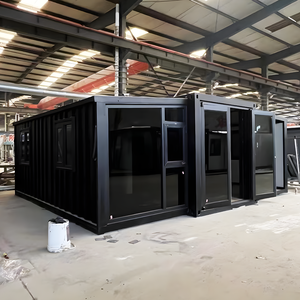
The manufacturing boom driven by USMCA/T-MEC nearshoring in the Estado de México logistics belt has created acute demand for immediate commercial offices, supervisor housing, and modular factory complexes.
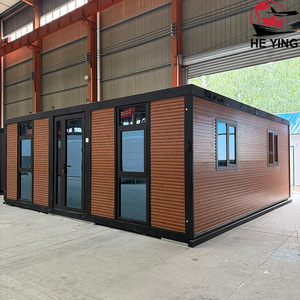
Addressing Mexico City's housing deficit requires rapid-build, cost-effective residential units capable of installation on uneven terrain with minimal civil works and basic utility hookups.
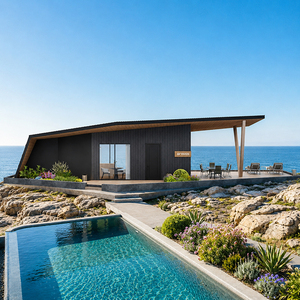
The eco-resort and glamping sector surrounding the CDMX basin demands striking architectural aesthetics, zero environmental disturbance, and superior thermal insulation for high-altitude nights.
Exporting modular homes into Mexico City is not simply a matter of freight logistics; it requires rigorous adherence to the region's specific structural engineering challenges. CDMX sits on an ancient lakebed (Lake Texcoco), resulting in soft silt layers that amplify seismic ground motion during Pacific subduction zone earthquakes (such as the 1985 and 2017 events). Manufactured housing suppliers must provide certified ductility and energy-dissipation parameters to comply with the Reglamento de Construcciones para el Distrito Federal (RCDF).
Traditional unreinforced masonry (brick and concrete block) common in informal CDMX construction suffers from brittle shear failure during long-period seismic waves. Our manufactured homes utilize Cold-Formed Light Gauge Steel (LGS) and Structural Q355B Galvanized Steel Columns designed with moment-resisting connections. This engineered ductility allows the structure to flex and absorb kinetic energy without structural collapse, yielding a seismic performance factor compliant with high-risk ground acceleration zones.
Because seismic inertia forces are directly proportional to building mass ($F = m \cdot a$), our steel modular systems reduce overall dead load by over 60% compared to traditional concrete block construction. Lower mass means significantly lower destructive seismic forces acting on the foundation.
Mexico City’s unique highland climate (Cwb under Koppen classification) features intense solar ultraviolet radiation during daytime, paired with rapid radiative cooling at night. Manufactured homes lacking thermal mass or adequate insulation suffer from extreme internal temperature fluctuations. Our export units incorporate continuous envelope insulation:
| Building Envelope Component | Export Specification Standard | Mexican Normative Benchmark (NOM Compliance) | Thermal / Structural Performance |
|---|---|---|---|
| Roof System | R-38 High-Density Mineral Wool / PIR Core | Exceeds NOM-018-ENER Thermal Envelope | Prevents solar heat gain; zero leaks during heavy rains |
| Exterior Walls | R-21 Polyurethane Sandwich Panel / Fiber Cement | NOM-001-SCFI Structural Safety | Class A 1,400°F Fire Rating; High soundproofing |
| Floor System | R-22 Insulated Subframe + MGO Board | RCDF Substructure Code | Resists rising soil dampness & ground coldness |
| Window Glazing | Double-Pane Low-E Argon Gas Filled Glass | NOM-024-ENER Glass Insulation | Blocks 84% UV rays; lowers HVAC energy consumption |
When importing prefabricated structures into Mexico, navigating the Servicio de Administración Tributaria (SAT) and customs classification is critical for cost control. Our prefabricated modular buildings are registered under HS Code 9406.90 (Prefabricated Buildings). Under the rules of origin of the T-MEC / USMCA trade agreement, certified structural components manufactured with qualifying regional value content enter Mexico under preferential zero-duty tariffs, preventing unexpected 15-25% import surcharges at Mexican customs ports.
We combine advanced automation, structural engineering expertise, and end-to-end export logistics to deliver reliable housing solutions to developers, governments, and commercial buyers across Mexico.
Computer-controlled cold-formed steel framing guarantees 100% dimensional accuracy, eliminating on-site cutting waste and assembly delays in CDMX.
All steel structural members receive a 275g/m² zinc coating, shielding the building envelope against humid micro-climates and soil sulfates for a 50+ year lifespan.
Our flat-pack designs load directly into 40ft High Cube ocean containers, shipping efficiently via Port of Veracruz or Manzanillo straight to Mexico City’s Circuito Exterior Mexiquense bypass.
Built to meet international structural criteria, enabling commercial buyers to secure conventional 30-year property financing with up to 95% Loan-to-Value (LTV).
Pre-installed electrical conduits, plumbing manifolds, and pre-hung doors mean a 2-bedroom modular home can be fully assembled on site in under 3 days by a crew of 4 workers.
From CAD structural drawings and foundation engineering details to customs paperwork support, our engineering team works directly with your local project architects in Mexico.
Key information for property developers, government procurement managers, and commercial importers in Greater Mexico City.
Our engineered light gauge steel structures feature moment-resisting ductile framing designed to flex during ground motion without brittle failure. We provide comprehensive structural calculation packets (Memoria de Cálculo Estructural) stamped by certified structural engineers, fully compliant with the Reglamento de Construcciones para el Distrito Federal (RCDF) for Zone III (lakebed soil) conditions.
For Atlantic shipments, containers enter through the Port of Veracruz and travel via Highway 150D directly to eastern CDMX/Estado de México. For Pacific shipments, goods enter via Port of Manzanillo along Highway 15D. To avoid Mexico City’s daytime heavy vehicle movement restrictions (Restricción de Circulación de Carga en CDMX), trucks utilize the Arco Norte or Circuito Exterior Mexiquense bypass loops for direct site delivery during permitted hours.
Under HS Code 9406.90, prefabricated housing components compliant with qualifying regional content criteria under the USMCA / T-MEC trade agreement enter Mexico duty-free (0% tariff). We supply complete Certificates of Origin and commercial documentation to facilitate smooth customs clearance through Mexican customs agents (Agentes Aduanales).
Yes. Because manufactured steel homes weigh up to 65% less than traditional masonry buildings, they can be anchored using helical screw piles, isolated concrete footings (zapatas aisladas), or lightweight perimeter grade beams. This minimizes excavation costs and avoids deep pile driving on soft soil parcels.
Units intended for Mexico are wired for 127V / 220V 60Hz AC electrical systems matching CFE (Comisión Federal de Electricidad) specifications, including pre-installed conduits, NEMA standard outlets, and breaker panels compliant with NOM-001-SEDE. Plumbing lines utilize standard CPVC/PEX water supply and PVC waste lines ready for immediate connection to municipal grids or septic systems.
Standard factory production for volume orders (e.g., 10 to 50 modular units) requires 15 to 25 calendar days. Ocean transit from port to Port of Veracruz takes approximately 22 to 28 days, followed by 2 days for customs release and final truck delivery to your site in Mexico City.
Connect with our senior engineering and export logistics team to request detailed structural blueprints, CIF Veracruz/CDMX price quotes, or customized modular layout designs.
Inquire Now