
Factory-direct prefabricated units customized for South Korean building standards, extreme weather resilience, and fast-track site deployment.
Analyzing structural integrity, thermal envelope performance, and off-site prefabrication dynamics for Korean industrial, civil, and commercial projects.
South Korea’s rapid industrial expansion—driven by mega-projects such as the Yongin Semiconductor Cluster, expanded logistics corridors surrounding Busan Port, and highland infrastructure developments in Gangwon-do—has placed unprecedented pressure on traditional construction timelines. The intersection of strict municipal building regulations (Korean Building Act), rising urban land costs, and a tightening domestic skilled labor market has accelerated the shift toward off-site manufactured portable shelters and modular buildings.
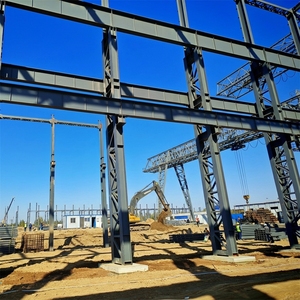
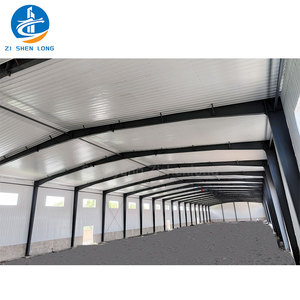
As an established export-focused factory partner, Foldum Corp leverages automated cold-formed light gauge steel manufacturing and heavy structural steel fabrication to deliver portable shelters that meet South Korea’s rigorous structural standards (KDS 41 Seismic Engineering Criteria). By shifting 70% of construction to a controlled factory setting and leaving only 30% for rapid on-site assembly, procurement directors reduce project schedules by up to 60% while strictly adhering to local thermal insulation directives for Central Zone 1, Central Zone 2, and Southern climatic regions.
| Technical Parameter | Standard Shipping Container | Traditional On-Site Build | Foldum Industrial Modular Shelter |
|---|---|---|---|
| Manufacturing Process | Modified Storage Units | 100% In-Situ Construction | 70% Factory Build / 30% On-Site Installation |
| Thermal Insulation (R-Value) | Low (R-5 to R-8) | Variable (Depends on Site Quality) | R-38 Roof / R-21 Walls / R-22 Floors (Ondol Ready) |
| Seismic & Wind Resistance | Unrated Structural Joints | Standard Code Compliance | KDS 41 Rating / Up to 60 m/s Wind Velocity |
| Logistics Profile | High Freight Volume (1 unit/truck) | Raw Material Delivery Bottlenecks | 18" Flat-Pack (10 Units per Truck / 40ft HQ Container) |
| Structural Service Life | 5 - 10 Years (Prone to Rust) | 30+ Years | 25 - 50+ Years (Hot-Dip Galvanized Frame) |
Engineered to adapt seamlessly into Korean geographic terrains, climate extremes, urban planning zones, and industrial ecosystems.
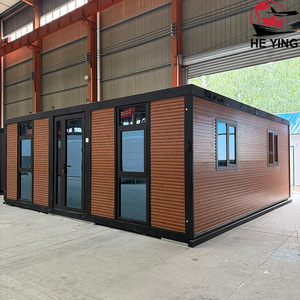
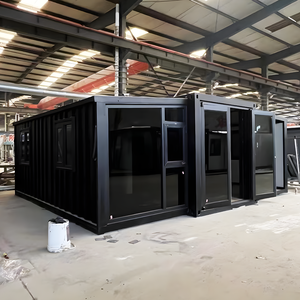
With billions invested in mega-industrial hubs like the Pyeongtaek and Yongin Semiconductor Clusters, general contractors require immediate, high-density, sub-zero insulated workforce accommodation. Our expandable container units and flat-pack shelters deploy in days, featuring integrated climate controls, electrical safety switches, and soundproof wall cores.
Construction and defense operations in the mountainous northern provinces of Gangwon-do and Gyeonggi-do experience brutal sub-zero winter blasts down to -20°C. Our specialized cold-climate structural envelope incorporates PIR/PU insulation panels, air-gapped thermal breaks, and seamless compatibility with Korean Ondol radiant floor heating systems.
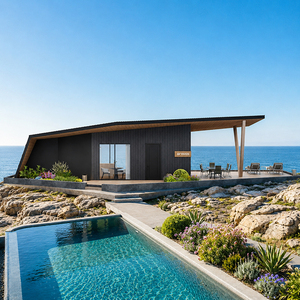
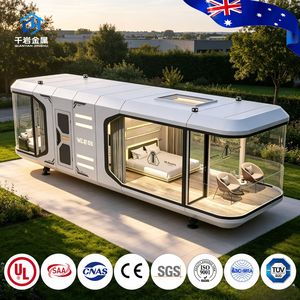
For eco-tourism projects in Jeju Island, Gangneung, and Namhae, standard concrete construction faces strict environmental zoning restrictions. Our luxury aluminum alloy tiny homes and space capsule cabins leave zero permanent ground trace, feature typhoon-resistant wind profiles, and offer panoramic Low-E double glazing for year-round hospitality operations.
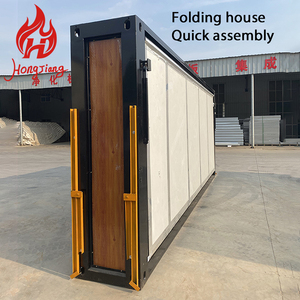
Supporting municipal disaster management agencies across major hubs like Seoul, Incheon, and Busan, Foldum’s 18-inch flat-pack micro-shelters can be stored in emergency stockpiles. A single flatbed truck delivers 10 full units to flood, landslide, or civil disruption sites, enabling tool-free setup within 15 minutes per shelter.
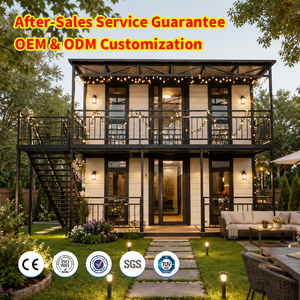
In urban redevelopment zones such as Sejong Administrative City and Songdo International Business District, tight site boundaries restrict material staging. Our pre-engineered modular office units assemble rapidly in confined urban plots, serving as temporary municipal command centers, tech showrooms, or site management hubs.
Deploying off-grid communications gear and power monitoring modules in rugged terrain demands structural resilience. Foldum’s heavy-duty galvanized steel shelters operate off-grid with integrated solar brackets, battery storage racks, keyless entry security, and fire ratings to protect sensitive hardware.
Understanding the regulatory amendments, ESG imperatives, and technology adoptions governing portable shelters in ROK.
The South Korean Ministry of Land, Infrastructure, and Transport (MOLIT) has introduced streamlined approval pathways for off-site prefabrication under revised building code provisions. This regulatory push incentivizes public sector projects, emergency housing authorities, and tier-1 construction firms (such as Hyundai E&C, Samsung C&T, and GS E&C) to adopt certified factory-built modular structures to lower site carbon footprints and improve work safety metrics.
Traditionally, South Korean jobsites relied on low-cost modified ocean freight containers. However, modern municipal fire safety mandates and strict structural safety standards have rendered standard containers obsolete. Modern procurement policies demand certified galvanized steel structural tubing, non-combustible PIR/Rockwool core panels, and verified thermal transfer coefficients (U-values) that comply with Korea’s Central Insulation Zone mandates.
With South Korea’s aging construction labor force and rising hourly wage rates, traditional on-site masonry and stick-built framing have become economically unviable for short-to-medium term projects. Factory prefabrication transfers labor hours into automated industrial facilities, ensuring consistent precision, predictable production timelines, and significant overall budget savings for overseas importers and local distributors.
South Korea’s aggressive carbon neutrality goals for 2050 require construction projects to track embodied carbon. Modular portable shelters produced by Foldum utilize recyclable high-grade steel profiles, non-toxic interior finishes, and energy-efficient double-pane Low-E glazing, aligning seamlessly with ESG compliance metrics required by corporate end-users across the Korean peninsula.
Combining world-class off-site production capabilities, strict compliance standards, and reliable international supply chain management.
Foldum Corp operates state-of-the-art manufacturing facilities capable of delivering scalable order volumes directly to major South Korean ports, including Busan Port, Incheon Port, and Pyeongtaek Port. Our streamlined production protocols guarantee consistent quality, precise engineering tolerances, and rapid turnaround times.
Essential knowledge addressing structural standards, customs logistics, insulation regulations, and installation mechanics.
Yes. Foldum modular units and portable shelters can be custom-engineered to satisfy South Korea’s regional heat transfer coefficient standards (U-values) for Central Zone 1, Central Zone 2, and Southern climates. By incorporating high-density Polyisocyanurate (PIR), Rockwool, or PU sandwich panels alongside Low-E argon-filled double glazing, our structures meet local energy efficiency criteria for temporary and permanent applications.
We ship regularly to major Korean entry hubs, including Busan Port (부산항), Incheon Port (인천항), and Pyeongtaek Port (평택항). Production lead times typically range between 15 to 25 business days depending on design complexity and order volume. Transit times from our main factory export docks to Korean ports generally average 5 to 9 days, enabling fast project turnaround.
Absolutenly. Our floor sub-structure features R-22 thermal barrier insulation and a heavy-duty magnesium oxide (MgO) or fiber-cement sub-floor base. This design is fully optimized for the installation of electric radiant heating film, hydronic PEX pipe Ondol heating loops, or traditional vinyl flooring overlays favored in South Korea.
Our micro-shelters and expandable container structures utilize high-tensile hot-dip galvanized steel frames linked by heavy-duty structural corner castings and high-grade fasteners. The completed units are wind-tunnel tested to withstand wind speeds up to 60 m/s (Category 5 hurricane equivalent) and carry a KDS 41 seismic rating, protecting against summer typhoons along coastal Korea.
Each Foldum temporary micro-shelter collapses to an ultra-slim 18-inch (approx. 45cm) height profile. A single 40ft High Cube (40HQ) shipping container can transport up to 10 fully equipped micro-shelter units, significantly reducing sea freight costs per unit and optimizing transport to job sites across Korea.
Foldum provides a comprehensive 10-year structural framework warranty on all galvanized steel members and a 2-year warranty on factory-installed fixtures, windows, doors, and electrical components. Furthermore, we provide localized installation manuals, architectural CAD/BIM drawing sets, and real-time remote engineering assistance for local assembly crews.